

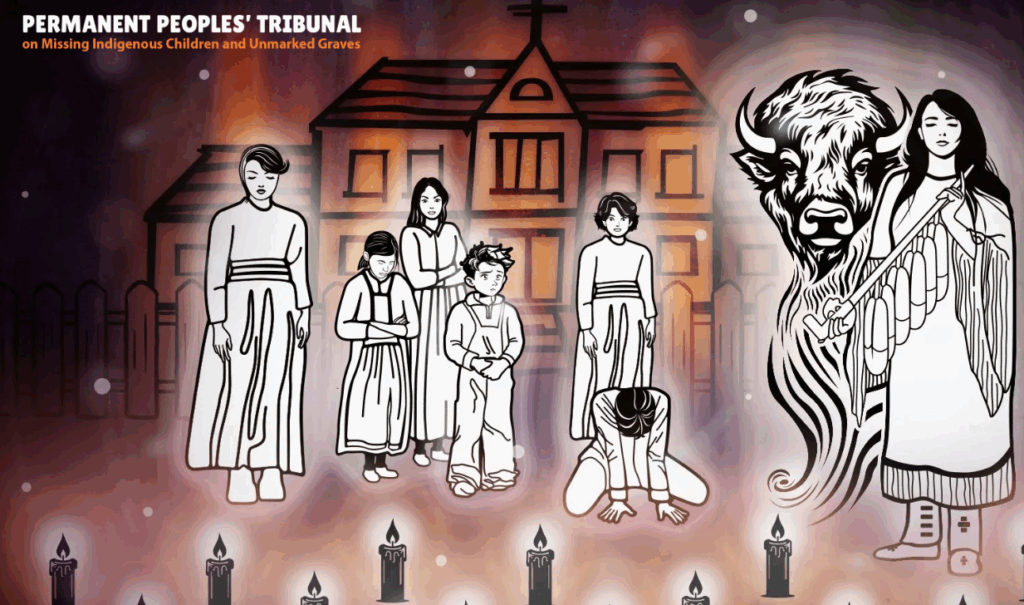
This May 25-29, 2026, the Daphne art Centre in Montreal, will host the Permanent Peoples’ Tribunal (PPT) to examine the deaths, disappearances, and unmarked graves of Indigenous children connected to the Indian Residential School system. The Native Women’s Shelter of Montreal (NWSM) submitted an application to the PPT in November 2023, which was accepted by the Tribunal in February 2024, and accepted by Canada in October 2024.
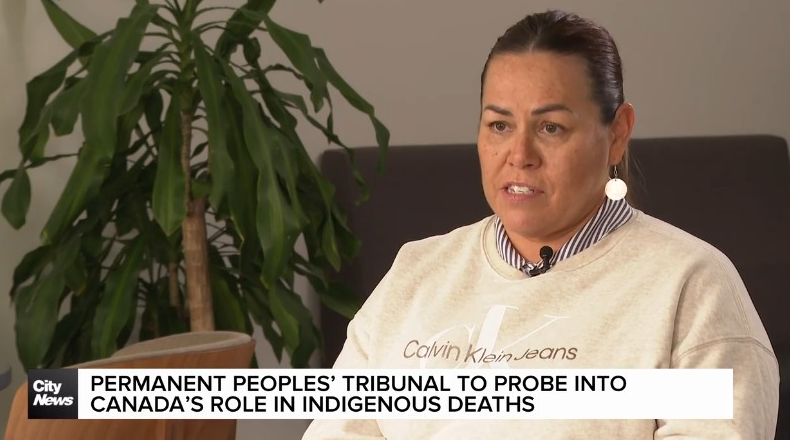
The Survivors’ Secretariat will participate in the Tribunal, bringing Mohawk Institute Survivors’ voices directly into the hearings. The Six Nations of the Grand Elected Council has submitted a letter of endorsement for the Permanent People Tribunal on Jan 13, 2026.
Throughout the week, Survivors, legal experts, archivists, and historians will share testimony and evidence regarding Missing/Disappeared Indigenous children and unmarked graves. They will also examine the treatment of the Indigenous children who attended Indian Residential Schools (IRS) in Canada for violations of human rights. The Tribunal is expected to review roughly 2,000 pieces of evidence collected by organizers.
The PPT provides an international platform to center Survivor voices and create a permanent non-partisan international record of what happened. As Dr. Beverly Jacobs, C.M., LL.B., LL.M., PhD, said at the Survivors’ Secretariat Survivor 2025 gathering in Thunder Bay, “It’s an opportunity for us to show the world exactly what happened.” The Secretariat lead Laura Arndt added that, “The tribunal puts power back into the hands of Survivors and their communities, challenging the colonial narratives that have historically silenced their truths.”
Despite apologies, the work of the Truth and Reconciliation Commission (TRC), Indian Residential Schools Settlement Agreement (IRSSA), and the mandate of the Office of the Special Interlocutor (OSI), Canada has not fully addressed the alleged human rights crimes against Indigenous children who attended Canada’s Indian Residential Schools. Survivors, families, and communities continue to face restricted access to records and have yet to obtain over 27 million Indian Residential School documents from the Canadian Government. Survivor organizations have reported difficulty in accessing records and a lack of funding to finalize their investigation, which leaves many with unanswered questions and open wounds. Although the PPT does not have legal authority over the entities involved in the operation of Indian Residential schools, it does provide an opportunity to preserve Survivor truths permanently and push for international accountability.
In this blog, we explore why the PPT matters and how it can make a difference for Survivors and the Survivors’ Secretariat’s mission to Bring the Children Home.
What is the Permanent Peoples’ Tribunal (PPT)
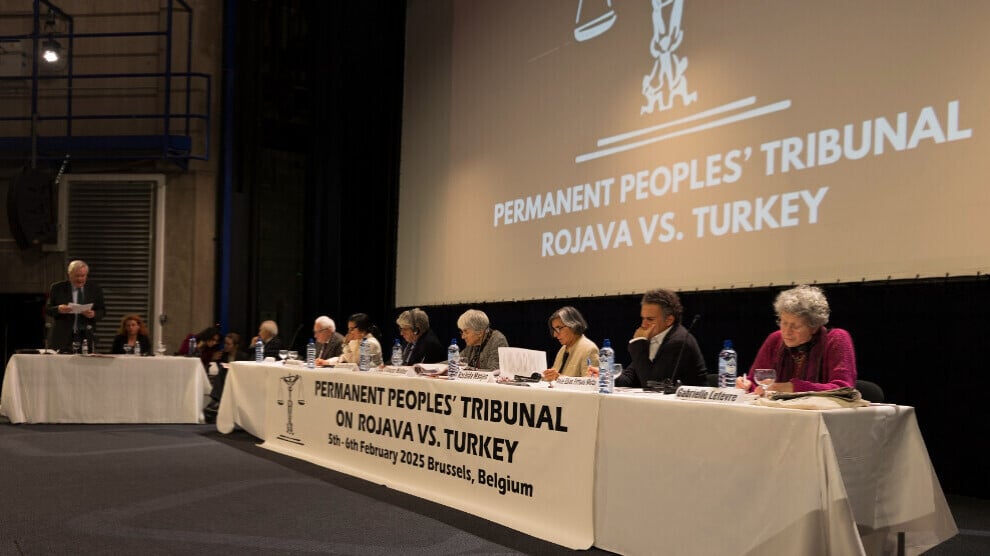
The Permanent Peoples’ Tribunal (PPT) was founded in 1979 in Bologna, Italy. Since its founding, the PPT has convened more than 50 sessions worldwide on issues ranging from war crimes and genocide to environmental destruction, corporate abuses, and systemic discrimination. Unlike traditional courts established by governments or international treaties, the PPT functions as an independent international opinion tribunal. It applies internationally recognized human rights law to examine allegations of serious human rights violations, and issues judgments, recommendations, and findings.
Each session typically involves public hearings, testimony from Survivors, evidence, legal argument, and deliberation. Cases are submitted by Survivors, impacted communities, or civil society organizations. These submissions are reviewed to determine whether they fall within the PPT’s mandate and merit a hearing. Accepted cases are then heard by panels of distinguished jurists and experts, typically composed of 5 to 11 judges drawn from a permanent list of members. These panels often include former judges, legal scholars, human rights advocates, and globally respected voices.
Why Permanent Peoples’ Tribunal (PPT) Judgments and Reports Matter
PPT judgments and reports are widely cited by advocates, scholars, international organizations, and civil society, supporting accountability, informing research, and contributing to the global record of human rights history. Since these sessions are public and documented, they continue to shape how critical issues are understood and addressed worldwide.
The Our-Truths.com website has been established for May 2026 Tribunal.
Who is involved in the May 2027 Tribunal?
A legal advisory committee was formed in the fall of 2024. Many organizations have since banded together to assist the advisory committee to prepare for the hearing. Some of these organizations include:
Aboriginal Legal Services (ALS): Providing decades of culturally informed legal advocacy and experience in landmark cases, ALS helps ensure Indigenous peoples receive equitable treatment and access to justice.
JFK Law LLP: A full-service Aboriginal law firm offering strategic guidance and representation across all areas of Indigenous law, including rights and title, self-governance, and Treaty negotiations.
Know History: North America’s largest historical research firm, delivering Indigenous-led, multi-jurisdictional research to document experiences rigorously and respectfully.
The David Suzuki Foundation: A non-profit organization working to protect the environment and promote sustainability in Canada. It highlights that environmental protection is connected to Indigenous sovereignty and recognizes the links between colonialism, Indian Residential Schools, and environmental harm.
Survivors’ Secretariat: Representing Survivors of Mohawk Institute and the investigation into the longest running IRS in Canada, where an estimated 15,000 children were taken to, from 60+ Indigenous communities over 140+ years.
Why the Permanent Peoples’ Tribunal Matters for Survivors of Indian Residential Schools (IRS)
The Permanent Peoples’ Tribunal (PPT) gives Survivors a platform to share their lived experiences internationally and to ensure their voices are preserved for generations to come. The PPT’s legitimacy is not from governments or courts, but from transparency, public support, and international recognition.
The tribunal’s findings can serve as a catalyst for governments to address and remedy any human rights violations identified through its proceedings. The Survivors’ Secretariat hopes these findings will help secure adequate and sustained funding, counter denialism, and strengthen support for the case to be considered by international courts who do have the authority to hold parties legally accountable.
The Permanent Peoples’ Tribunal (PPT) records are documented independently and internationally, outside the control of any single government. Once submitted, these testimonies and evidence cannot be altered or erased by Canada, ensuring that Survivor Truths remain a permanent and undeniable record of harm. By documenting their testimony publicly and independently, it affirms Survivors’ truths and will hold a record that details violations of international law.
Holding States and Groups Accountable
The PPT examines systemic responsibility, including the actions of the Canadian state, institutional failures, and patterns of settler amnesty and impunity. Legal scholars like Kimberly Murray, the former Independent Special Interlocutor (OSI), reported that Canada often allowed deaths, disappearances, and abuse of Indigenous children to go uninvestigated, which demonstrated a need for a mechanism that operates independently of government control.
The PPT is designed for situations where the legal system may be a part of the problem. Its findings provide an opportunity for language that Canadian institutions have traditional stayed away from, including terms like genocide, crimes against humanity, and systemic violence. Such as when the TRC documented the history and harms of the Indian Residential School system, collected Survivor testimony and historical records, but only referred to the harm endured by attendees as cultural genocide. The TRC was a government-funded commission, and despite the organization pushing to use harsher terms, they were not permitted to do so.
Complementing Formal Justice
By collecting evidence and documenting testimony in a permanent international record, the PPT creates a foundation for international advocacy, UN scrutiny, and future legal actions. Unlike domestic or TRC archives, this evidence cannot be destroyed, erased, or restricted by institutions involved in the operation of the IRS system. This ensures that Survivor truths remain permanent, undeniable, and beyond the reach of the Canadian government and church affiliated institutions.
Although the PPT cannot compel Canada to act, it can shift public narratives and strengthen future legal and political efforts. For many Indigenous communities, it provides a space to be heard, have harm acknowledged accurately, and reclaim authority over their history.
Where do you find official PPT records?
The Permanent Peoples’ Tribunal produces full judgment documents and session records for its hearings, which are publicly available, i.e.) the tribunal’s evidentiary process, witness testimony procedures, and collection of documentary evidence for tribunal cases can be found here.
A topic specific website has been created for the Permanent Peoples’ Tribunal on Missing Indigenous Children and Unmarked Graves. If you would like to learn more.
If you are a Survivor of the Mohawk Institute and would like to submit evidence or testimony to the PPT for consideration, contact | or 226-966-4312. All other Survivors can contact Sarah at .